Just a little update on where I'm at with things...
1) It's official... PITY ISN'T AN OPTION is now available for purchase on Smashwords!!! YAY! Smashwords has the following formats available: epub, HTML (online reading format), PDF, RTF, LRF, Palm Doc, and Plain Text. It should also be arriving in Apple and Barnes & Noble's ebook "catalogs" soon--I will let you know when they're available! In the meantime, feel free to check it (and the free sample) out on Smashwords, and spread the word. :)
2) My facebook author page is officially up and running. This week I'll be posting a few excerpts from PITY ISN'T AN OPTION, from both Hattie and Jonas' point of view.
You can find me here.
If you have an author page, feel free to direct me to it in the comments!
3) Starting next week, I'll be posting a 3-part series on the story behind PITY's cover, in which I will share my experience with the whole ebook cover process. The end result turned out great, but there were a few kinks at first (and one of them was quite costly)!
4) I've added tabs to my blog. Haven't figured out how to remove the sidebar stuff yet, so that's the next step. It'll be fixed soon. But if you're interested in an excerpt, I have one up on the "book" tab. :)
And now for the visual inspiration: In PITY, Jonas talks about birds, and Hattie deals with cotton. I love visuals when I'm reading about something I don't know much about, so I thought I'd share my Pinterest PITY ISN'T AN OPTION board with you guys. :) Enjoy!
Be blessed,
Jessica

Showing posts with label Book cover. Show all posts
Showing posts with label Book cover. Show all posts


Pity Isn't An Option cover reveal
I'm so excited to get to share the cover of PITY ISN'T AN OPTION here first on my blog... it's not on Goodreads just yet (hoping in the next couple of days) but this has been such a long time coming that I had to share :) Update: It's on Goodreads! Click the link add to Goodreads on the sidebar! :)


And here's the blurb:
Seventeen
year-old Jonas Norton is trying to come to terms with what his blood disorder has robbed from him, including his two most favorite things: basketball, and competing in Hatchet Racket, Wanless’ annual
hatchet-throwing contest. The facts that his father works constantly to pay for his
blood tests and Jonas can actually see the disappointment in his eyes for being
such a failure only make matters worse. And even worse than all of that? Jonas'
own twin brother, Micah, is perfectly healthy, and becoming quite the basketball
player himself. Also, Hattie, the girl Jonas has loved for forever? She has no idea how
he feels.
Sixteen
year-old Hattie Akerman lives down the hill from Jonas. Though her father,
Heath, tries to hide his lack of mental clarity behind the bottle and she's
pretty much given up on having any kind of relationship with him, she would
still rather her younger sister, Lucy, not have to deal with the consequences
of his behavior. Hattie helps her mother by baking food to sell at Market and
looking out for Lucy. No matter what the rest of the town says about her crazy
father, Jonas sticks up for them. He is, by far, her very best friend.
As
if things aren’t complicated enough already, Heath and Micah are unexpectedly
drafted into President Kendrick's army (an army from which no one ever returns) just
days before Thanksgiving. When Heath disappears instead of arriving at the
Meeting Place to check in, Hattie and Jonas decide they’ve had enough, and take
matters into their own hands. And though nothing could have prepared them for
what happens next, Hattie and Jonas learn that hope can be seen in every situation. You just have to know where to
look.
Yayyyy! I'm so excited! I'll post more about the process soon and let everyone know when it's available on Goodreads and whatnot.
Be blessed,
Jessica
Identifying with Characters: For the love of covers
Before we delve into this blog post any further, let's highlight the point of this post:
1) Identifying with characters as a reader
versus
2) Placing yourself into that character's situation AS the character
then,
3) The cover enabling either 1 or 2 to happen with the reader
4) Figuring out which cover readers like more, depending on 1 and 2
I'm going to be upfront about this--there will not be an answer at the end. I'm simply posting this because I'm curious: Do most readers prefer to get into the MC's head and know everything about them as a best friend? Or do they prefer to step into the character's shoes as the character themselves? And how much of a part do covers have to do with this?
Let's go over a couple of examples (some more overused as others--keep in mind we are not reviewing the books; I chose these examples based only on the covers):
Example #1

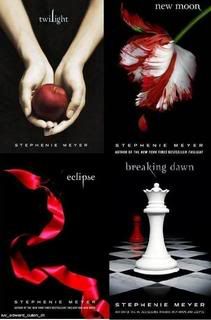
This book series is insanely popular because the reader can very easily step into the MC's shoes. Bella does not say much about her appearance throughout the series, and in staying vague about it, the reader can share those experiences in a more personal way if they choose. Being as the series is romantical and angst-y and all, what better way to ensure that the readers feel Bella's feelings on a more personal level than to keep from sticking everyone with a specifically described MC on the cover (or in the books as well)?
Example #2

Logline: Who would have guessed that four minutes could change everything?
From a reader's point of view, I'd say it's not too hard to get into the MC's head and feel she could be you. It's also pretty easy to imagine you could be the girl from the cover view... the picture of the couple is small enough that you notice the word LOVE more than you see the MC. (So if the picture were a close-up, and a dark, straight-haired reader saw a blonde with long, curly hair, would that keep her from wanting to read it?)
Example #3

Logline: It happened like this. I was stolen from an airport. Taken from everything I knew, everything I was used to. Taken to sand and heat, dirt and danger. And he expected me to love him.
This is my story.
A letter from nowhere.
Example #4

Logline: Girl Meets boy. Girl loses boy. Girl gets boy back... sort of.
You can see the guy holding the girl's hand... again, that hand on the left could be the reader's. If two faces were on the cover, the reader might be separated from the MC's emotional state a bit--they'd associate all the feelings with the face they saw, instead of how they would feel themselves in the same situation.
Example #5

Logline: Please let me go, I won't tell.
Knowing the MC is blind and can't see anything as the events become more and more perilous is much more serious when you feel as though you've stepped into her shoes. You see what she sees (if you have read this, you'll know what I mean), vs. what could have been if an entire MC photo was on the cover and you simply read her thought process.
There are so many examples of full-on character covers, that I won't even bother trying to use my own example. Just go to this article called Uncovering YA Covers: How Dark Are They? (a post from back in 2010 regarding YA covers--it's actually a pretty interesting read) and you'll see how often a thin, (usually white) MC is wrapped around the book for all to see.
So, here's the question. In which books can you relate to the protagonist on a more personal level? I would guess the top five, not the hundreds shown in the examples on that blog post I shared. Here's my thinking on this: In seeing the person on the cover and knowing it is obviously not you, you feel distanced a bit.
Am I right? Does this even matter to people?
You tell me.
Would you, as a reader, prefer to get into the MC's head and know everything about them as a best friend would?
Or would you prefer to step into the character's shoes as them?
And how much of a part, if any, do covers have to do with this?
1) Identifying with characters as a reader
versus
2) Placing yourself into that character's situation AS the character
then,
3) The cover enabling either 1 or 2 to happen with the reader
4) Figuring out which cover readers like more, depending on 1 and 2
I'm going to be upfront about this--there will not be an answer at the end. I'm simply posting this because I'm curious: Do most readers prefer to get into the MC's head and know everything about them as a best friend? Or do they prefer to step into the character's shoes as the character themselves? And how much of a part do covers have to do with this?
Let's go over a couple of examples (some more overused as others--keep in mind we are not reviewing the books; I chose these examples based only on the covers):
Example #1
This book series is insanely popular because the reader can very easily step into the MC's shoes. Bella does not say much about her appearance throughout the series, and in staying vague about it, the reader can share those experiences in a more personal way if they choose. Being as the series is romantical and angst-y and all, what better way to ensure that the readers feel Bella's feelings on a more personal level than to keep from sticking everyone with a specifically described MC on the cover (or in the books as well)?
Example #2
Logline: Who would have guessed that four minutes could change everything?
From a reader's point of view, I'd say it's not too hard to get into the MC's head and feel she could be you. It's also pretty easy to imagine you could be the girl from the cover view... the picture of the couple is small enough that you notice the word LOVE more than you see the MC. (So if the picture were a close-up, and a dark, straight-haired reader saw a blonde with long, curly hair, would that keep her from wanting to read it?)
Example #3
Logline: It happened like this. I was stolen from an airport. Taken from everything I knew, everything I was used to. Taken to sand and heat, dirt and danger. And he expected me to love him.
This is my story.
A letter from nowhere.
In Stolen, the MC's thoughts take precedence over everything else. You have an idea how she looks, but it doesn't get too technical. Description and thought processes are what make everything in this book matter--therefore, feeling that you personally could be the one "stolen" makes the book (in my opinion). If a girl's face had been put on the cover, some readers wouldn't be able to identify with the situation as much.
Example #4
Logline: Girl Meets boy. Girl loses boy. Girl gets boy back... sort of.
You can see the guy holding the girl's hand... again, that hand on the left could be the reader's. If two faces were on the cover, the reader might be separated from the MC's emotional state a bit--they'd associate all the feelings with the face they saw, instead of how they would feel themselves in the same situation.
Example #5
Logline: Please let me go, I won't tell.
Knowing the MC is blind and can't see anything as the events become more and more perilous is much more serious when you feel as though you've stepped into her shoes. You see what she sees (if you have read this, you'll know what I mean), vs. what could have been if an entire MC photo was on the cover and you simply read her thought process.
There are so many examples of full-on character covers, that I won't even bother trying to use my own example. Just go to this article called Uncovering YA Covers: How Dark Are They? (a post from back in 2010 regarding YA covers--it's actually a pretty interesting read) and you'll see how often a thin, (usually white) MC is wrapped around the book for all to see.
So, here's the question. In which books can you relate to the protagonist on a more personal level? I would guess the top five, not the hundreds shown in the examples on that blog post I shared. Here's my thinking on this: In seeing the person on the cover and knowing it is obviously not you, you feel distanced a bit.
Am I right? Does this even matter to people?
You tell me.
Would you, as a reader, prefer to get into the MC's head and know everything about them as a best friend would?
Or would you prefer to step into the character's shoes as them?
And how much of a part, if any, do covers have to do with this?
Interpreting a Book Cover
If I fall into the "normal" writer category (and I'm pretending that I do, so please don't burst my clueless bubble here), then I won't be alone in saying we picture what our eventual cover will look like long before reach the point of publication. (I will get there, eventually! Positive thinking!)
Each book cover is different. Some have a random object or objects (with a meaning that may or may not make sense once you've read the book),
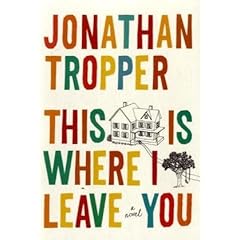
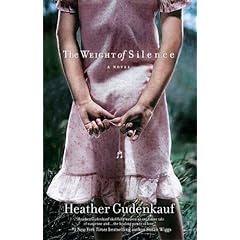

others have a picture of the main location of the story,
and some have pictures that make you curious as to what part the cover plays in the plot.
The picture I have in mind for mine (which may change as time goes on) is something in my story, but not something that would stand out as particularly important unless a person knew what I'll Love You Until was about.
I've imagined what it should look like for months now, and have spent TONS of time looking all over the internet for *just* the right one, but I've yet to find anything close to what I see in my head.
Anyway, here it is... kinda... minus a few specific details of the swing and its surroundings (I realize it's horizontal - and am not fond of the heart cutout, either).
It's so exciting to think about the possibility of a similar cover someday. =)
How do you see your cover? Is it an illustration? A photograph? Does it connect to a specific event, or mean something only the reader would understand? I'd love to hear your creative ideas!
(If you like to look at book covers for research, entertainment or both, check out The Book Design Review for many diverse cover designs. Though Joseph Sullivan has decided to no longer post, the blog is still up.)
Subscribe to:
Posts (Atom)
